About Rumos.
Founded by Franci DaLuz, M.Ed.
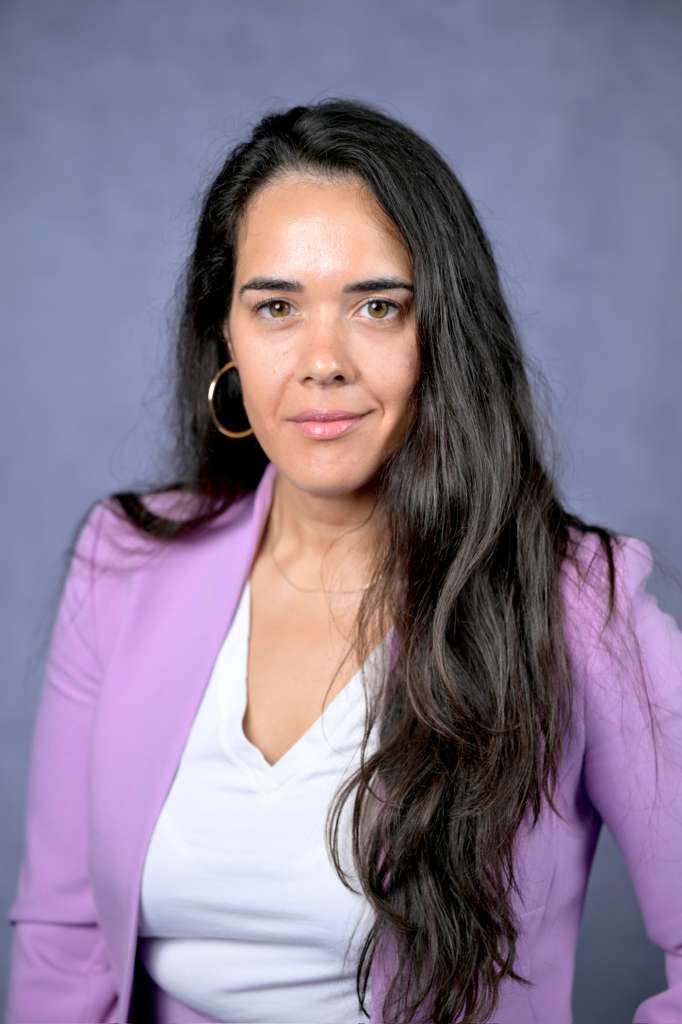
I grew up in Everett, Massachusetts, the daughter of Brazilian immigrants who worked harder than I have ever seen anyone work to give me a better future than they had.
My mother was at every one of my volleyball games. She never missed one. She was always in the stands, cheering.
She never came to a college visit. Neither did my father. Not because they didn't want to — because, in their words, they didn't speak the language and couldn't follow what was happening in those rooms.
They wanted to help. They were ready to gather money for application fees, take out loans, do whatever was needed. What they couldn't do was ask the questions you're supposed to ask on a college visit, because no one had ever told them what those questions were.
I figured the process out the way many first-generation kids do — by taking charge of my own future, by seeking out help, by being the translator and the planner at sixteen. My parents loved me deeply. They just didn't have the map.
I made it to UMass Boston. From there to Oxford as a Gilman Scholar. Eventually to a Ph.D. in education. The path was longer than it had to be and harder than it should have been, but I got there.
What I didn't know at the time was that I would spend the next twelve years working on the other side of admissions desks — first at Newbury College, where I took my first job right out of undergrad because the possibility of helping students like me had pulled me into this field, then at UMass Boston, Bunker Hill Community College, and Salem State University. The whole career was built around watching this same story play out, family after family. The parents who loved their children fiercely and didn't know how to help. The students figuring it out alone. The smart, capable families who fell through the cracks not because they didn't try, but because the system had never been explained to them.
A few years ago I was speaking at Newton North High School's Transitioning Together program. I spoke to students and parents about giving each other grace in the college process.
I told the students it was okay to feel frustrated when their parents seemed uninvolved — but to remember that their parents weren't disengaged. They simply didn't know how to support. I told the parents the same thing in reverse: your child is looking for your support, even if you don't speak the language, even if you've never been on a college campus, even if you think you can't help during a visit. At the very least, you will be lost together. And that's something.
After the talk, a mother walked up to me with tears in her eyes. She thanked me for putting words to what she had been feeling for years. Her son was standing beside her. They both seemed to leave a little lighter.
That was the night I knew the work I did inside admissions offices wasn't enough. Most families don't get to walk up to someone after a presentation. They don't have a translator in the room. They don't have someone who has lived their story standing in front of them, naming what they are carrying.
I'll tell one more story, because it's the one that gave Rumos its name in my head before I knew the name.
A Portuguese-speaking mother called my university admissions office one day. Her son had applied. She had seen my name in the directory and recognized it as Portuguese — and that was the door she'd been looking for.
She was smart, well-spoken, ready. She just didn't have the map. She didn't know what the acronyms meant. She didn't know what came in which order. She wasn't sure what she was allowed to ask. So she called me, and we stayed on the phone a long time, and then she came in to meet me in person.
Her son was admitted. Then came financial aid. Technically that wasn't my desk — but the financial aid office was slammed, and I knew how easy it would be for her family to fall through the cracks. So I kept helping. We filled out FAFSA together. We read the award letter together. He enrolled.
I've thought about that mother many times since. There are so many like her. Smart, hard-working families who just need someone to walk through it with them, in their language, with patience and without rushing.
Admissions and financial aid offices are doing their best, but they can't give every family that kind of attention. School counselors are doing essential work with caseloads of three or four hundred students each. Nobody designed the system to fail these families — but the system fails them anyway, by sheer math.
That's why Rumos exists. To be the friendly face. To translate the process. To sit at the kitchen table with the families who need a guide.
I built Rumos to be the kind of support my parents would have wanted to give me — but couldn't. I built it for the mother at Newton North and the mother who called my office and every family I have met since who carries the same questions. I built it for the next first-generation student who is figuring it out alone, and for the parents who want to be at every college visit but feel they can't be useful there.
Rumos doesn't replace the work families do together. It doesn't replace school counselors — I work alongside them every chance I get. What Rumos does is fill the gap: the sustained, individualized, multilingual attention that no overworked institution can give every family that needs it.
You don't have to be lost alone. You don't have to be lost together. With the right guide, you don't have to be lost at all.
Credentials and recognition.
Twelve years inside admissions.
Franci has held roles across four Massachusetts public higher education institutions, beginning with the job that drew her into the field right out of undergrad:
-
Newbury CollegeInternational & Domestic Admissions Counselor
-
University of Massachusetts BostonAssistant Director of Admissions
-
Bunker Hill Community CollegeInterim Associate Director of Admissions
-
Salem State UniversityAssociate Director of Admissions
-
Everett Public Schools CurrentDirector of Community Engagement & Digital Media
Leads multilingual outreach for a district of 9,000+ students from 63+ countries.
Speaking and publications.
-
"Leading from the Middle: Innovative Supervision Strategies with Mid-Level Leaders"
-
"Cultivating Responsible Leaders: Balancing Accountability and Development in Student Ambassadors"
-
"Bridging the Gap for Undocumented and UnDACAmented Students"
-
"The Politics of Language as a Tool for Belonging or Exclusion"
-
Recurring speaker, Transitioning Together program